In endurance sports and especially in marathon training most runners eventually encounter the term “hitting the wall.” It’s commonly described as an invisible physiological barrier, one you collide with somewhere around 70% into a race. In a marathon, that usually translates to kilometres 30–35. The classic symptoms are well known: legs that suddenly feel impossibly heavy, an inability to hold pace despite maximum effort, a powerful urge to stop running and then there is the less discussed companion to it all: emotional despair.
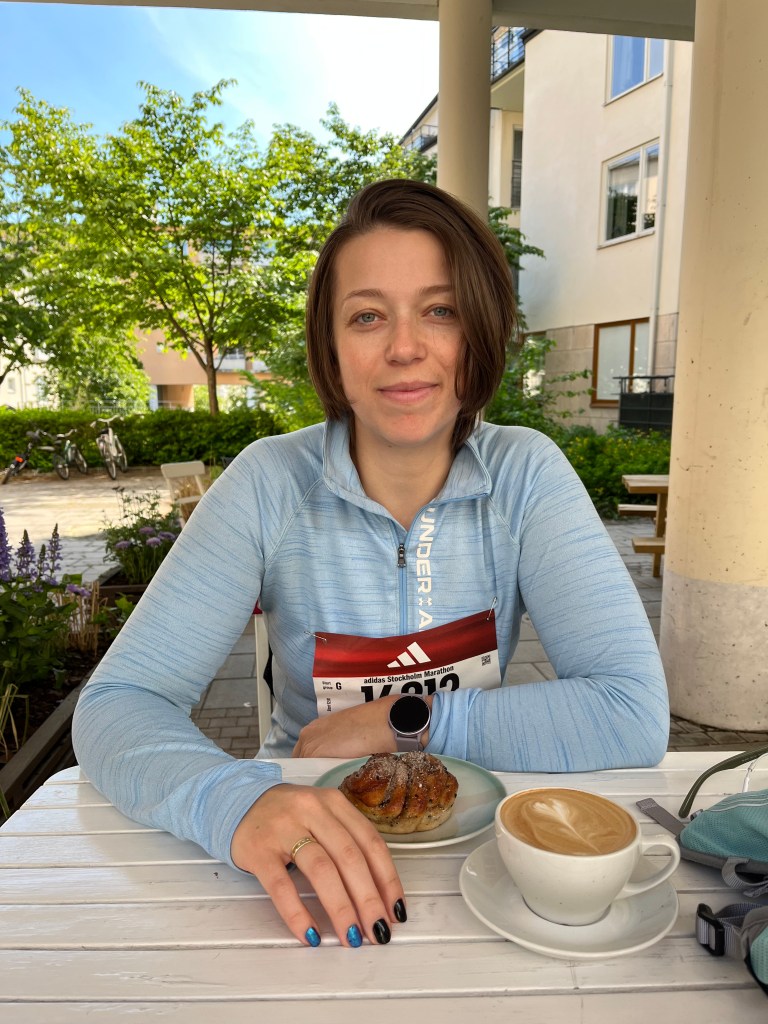
When I ran my first marathon in the Spring of 2025, my only goal was to finish. I ate all the pastries and just focused on having a good first experiance. I finished the whole race without ever hitting the wall. When I felt tired, I walked. When my legs needed relief, I gave it to them. By allowing myself that flexibility, I effectively sidestepped the wall entirely.
That changed during my second marathon.
This time, I had a finishing time in mind. And with that goal came an unexpected encounter with the thing I had confidently believed I was immune to: the wall.
I assumed immunity for several reasons. I had put in the work, averaging 70 kilometres a week in the lead-up. I had been meditating for nearly two decades and considered myself mentally resilient. I had lived through enough hardship to believe that discomfort, physical or otherwise wouldn’t break me. Whenever I read advice like “have a mantra ready for race day,” I skimmed past it. I told myself I had plenty of mantras to choose from if I ever needed one such as the classics: my feet are light, one more kilometre, quick steps. I never actually chose a specific phrase to anchor myself. In truth, I didn’t expect to need one.
After all, I wasn’t even aiming to be a marathon runner. I was an aspiring ultra-runner. This race was supposed to be fun, a stepping stone if you will, on a much longer path ahead.
I had mentally rehearsed countless scenarios. Plans B, C, and D were ready for sore legs, fading energy, and physical fatigue. What I hadn’t prepared for was this: a wall that had nothing to do with my body.
My wall arrived at kilometre 28.
At first, I rejected the idea outright. Twenty-eight kilometres? That’s a Sunday long run. That’s not the wall. Every book says it comes later. I had unconsciously learned that suffering only counted after some imaginary golden line beyond 30 kilometres. Before that, I believed myself safe.
Physically, things were still manageable. My legs felt tight, no surprise, considering I had classically gone out about 15 seconds per kilometre faster than planned. But then a question surfaced in my mind, quiet at first, then relentless:
Why am I here?
The question repeated itself, again and again, without an answer. I searched for something positive to respond with, something motivating or meaningful but to my utter dread nothing came. The loop continued for kilometres. As my pace slowed, the effort began to feel pointless. The gels I had relied on earlier in the race suddenly felt unbearable. Even water repulsed me. I didn’t want fuel, encouragement, or distraction. I wanted the experience to stop.
At the time, I interpreted this moment as failure. A lack of toughness. Proof that I wasn’t as mentally strong as I believed. I wasn’t ready – was I even a real runner? But with distance, I see it differently. The breakdown wasn’t weakness but exposure. I had reached the edge of the identity I had built as a “mentally strong runner,” and beyond that edge, I hadn’t yet done the work. That realization didn’t diminish me; it expanded what growth could look like.
What caught me completely off guard was that my body hadn’t failed me, my sense of meaning had.
This wasn’t simply a pacing error or a fueling issue. It was an existential collapse. I had trained my legs extensively, but I hadn’t trained my why. When the race demanded an answer to the question why am I here?, I had none ready.
We don’t talk about this version of the wall very often. In running culture, suffering is expected—but only the kind that looks heroic. We celebrate grit, discipline, and pain tolerance, yet rarely acknowledge the moments when motivation collapses without warning. When those moments happen, runners often assume something is wrong with them, as I did rather than recognizing it as part of endurance itself.

If I could speak to a runner during this moment of despair, it wouldn’t be about pace or posture. I wouldn’t tell them to dig deeper or toughen up. I would tell them this: if everything suddenly feels pointless, you haven’t failed. You’ve simply reached a place where effort needs meaning, not motivation. That feeling doesn’t mean the race is over—it means the race has changed. Trust the version of yourself who showed up for every training run for the past months, not the one standing here right now, questioning why you’re still moving forward.

Acknowledging this reality has changed how I think about marathon preparation. Training the mind isn’t just about positive self-talk or grit, it’s about clarity. It’s about knowing why the race matters to you before the doubts arrive. It’s about choosing something simple to return to when thinking becomes fragmented, preparing not just for discomfort, but for the moment when meaning temporarily disappears.
What I took from that race wasn’t just a lesson in pacing or fueling, though those mattered too but a deeper understanding of what endurance actually demands. Physical preparation will only carry you so far. When effort starts to feel meaningless, the body follows the mind, not the other way around.
Since that marathon, I approach training a little differently. I still respect the physical side of endurance, but I also prepare for the moment when motivation wavers. I define my why before each run begins and again during – It only takes a few minutes. I choose a single phrase or image to return to when thinking becomes scattered. Not something clever or inspirational, just something solid enough to hold onto when everything else falls away.
The wall, I’ve learned, isn’t a fixed point on the course. It doesn’t wait politely at kilometre 35, and it doesn’t always announce itself through empty legs or burning muscles. Sometimes it arrives early, quietly, and asks a question rather than inflicting pain.
Why are you here?
If you don’t have an answer ready, no amount of fitness will save you. But if you do, if you’ve trained your mind with the same intention as your body the wall becomes something else entirely. Not an ending, but a conversation. And one you might just be able to keep running through. I’m looking forward to meeting that version of myself in a future race, and to approaching that moment with far more curiosity, and far more gentleness than before.

This article has been published by: https://balticstride.com/Baltic_Stride_1st_Edition.pdf
 Running Over Hours
Leave a comment