Winter running mostly consists of standing in your hallway, already annoyed, feeling the cold radiating off the front door, trying to decide what version of misery you are willing to tolerate today and whether you will win or lose the layering lottery.

Here are my observations so far.
• Too many layers: cosy for the first kilometre, followed by the immediate realisation that you have fucked up, then a slow descent into overheating, sweating, and regret.
• Too few layers: it is known you should be cold for the first two kilometres while your body warms up. Too few layers means you are still cold five kilometres in, realising you have once again fucked up the layering, then continueing to lie to yourself for the next five that you will warm up.
• The narrow window where you put on the correct number of layers lasts about four minutes.
At some point, you accept that you will always be wrong, just in different ways. You run anyway, return home, and take a twenty-minute shower to reset your body thermostat and your expectations of what winter running really is.
Assuming you have actually taken the insane step of getting dressed and leaving the house, winter running then presents its second problem.
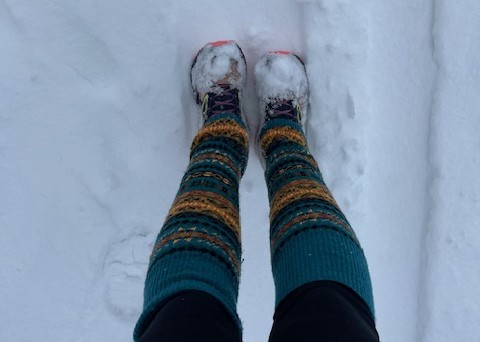
Snow and ice change how running feels, not just how it looks. You try to cruise along at your normal Z2 pace, but the constant micro-slips and stabilising muscles doing unpaid labour quietly send your heart rate into Z4. Any hope of an easy run is buried underground alongside other unfulfilled hopes and dreams, to be recovered sometime in spring.
At this point, winter running becomes less about speed and more about not falling flat on your arse.
To avoid eating snow on every run, I bought shoe grips. Not for better performance. I bought them because I was tired of constantly negotiating with the ground.
Winter running strips away performance fantasies without asking for permission. Pace becomes unreliable. Metrics become unreadable and messy. I log the runs and ignore the data. Effort is effort.
There is also a mental component to all of this.
Winter makes it difficult to maintain the illusion that you are in control. You can cling to pace, cadence, and heart rate if you want, but they stop cooperating the moment the conditions turn hostile somewhere around 30cm of snow and -15-degree weather. Letting go isn’t a noble act of mindfulness. It’s just the only option that doesn’t ruin the run and eat away at your sanity.
I finished listening to Can’t Hurt Me last week. I am not interested in screaming at myself or discovering new ways to suffer on purpose, but the idea of doing work without immediate reward felt relevant. Winter running offers very little feedback. No fast splits or ego-boosting runs. No PRs. No clean data. Just effort, logged and stored somewhere out of sight — to be accessed later if you’re lucky.
You don’t get confidence from winter runs. You just get consistency.
They force you to zoom out. To stop asking what today’s run did for you, and trust that it counts anyway. Not because it was good, but because it happened.
Which, in the end, seems to be the point. I can only assume that once the snow melts and this winter wonderland leaves, something useful will quietly remain for my spring races.
Winter does not make running heroic. It just makes it harder to pretend you are doing it for the right reasons. And since my reasons for running appear to involve discomfort and a prolonged attempt at self-understanding, it fits perfectly. So off I go to log another failed Zone 2 run, dressed in the wrong amount of layers, again.
 Running Over Hours
Leave a comment